
Heel pain can quietly take over your daily life. The first steps in the morning hurt. Standing too long feels impossible. Walking even short distances becomes frustrating. One common cause of this pain is plantar fasciitis.
Most people improve with rest, better shoes, stretching, and simple treatments. But when the pain lasts for months and nothing seems to help, some doctors suggest surgery.
Surgery can help certain people. However, there are risks that are not always fully discussed. In this article, we’ll talk about two “secret” dangers of plantar fasciitis surgery in clear, simple language. These are not meant to scare you. They are meant to help you make a well-informed choice.
What Is Plantar Fasciitis?
Plantar fasciitis happens when the thick band of tissue along the bottom of your foot becomes irritated. This band is called the plantar fascia. It connects your heel bone to your toes and helps support your arch.
When it becomes tight or strained, small tears can form. This causes pain, especially near the heel. The pain is often worse in the morning or after sitting for a while.
Most cases improve within several months without surgery. Doctors usually suggest:
- Stretching exercises
- Ice and rest
- Supportive shoes or inserts
- Physical therapy
- Injections in some cases
Surgery is usually the last option, only after many months of ongoing pain.
What Happens During Plantar Fasciitis Surgery?
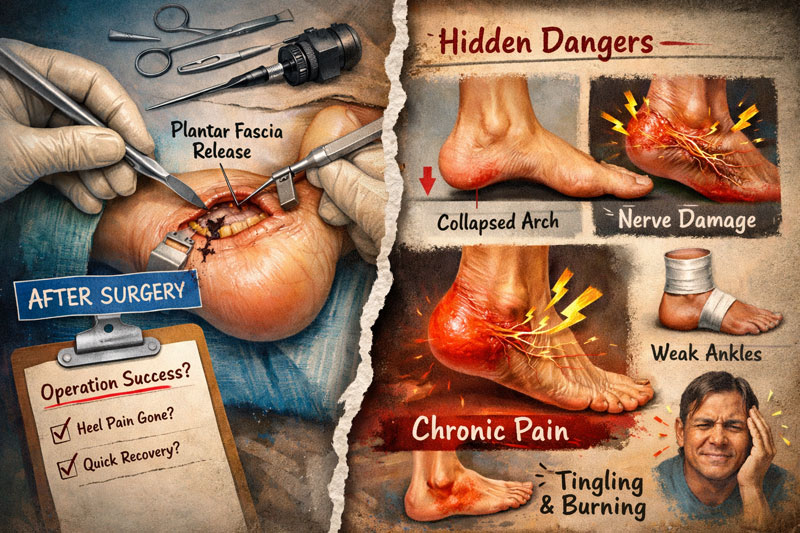
The most common procedure is called plantar fascia release. During this surgery, the doctor cuts part of the tight tissue to reduce tension and relieve pain.
It can be done:
- Through a small cut using a camera (less invasive)
- Through a larger open cut
The goal is simple: reduce strain on the tissue so it can heal and stop hurting.
Now let’s look at the two dangers that are often not fully explained.
Secret Danger #1: Loss of Arch Support and Long-Term Foot Problems
This is one of the biggest concerns.
The plantar fascia plays an important role in supporting your arch. When part of it is cut, even partially, the structure of your foot can change.
What Can Happen?
- The arch may weaken over time
- The foot may flatten
- You may develop new pain in different areas
- Ankles or knees may start hurting
This happens because your foot no longer works exactly the way it used to. Even though the surgery targets heel pain, it can change how weight moves through your foot.
Some people feel better right away. Others develop new discomfort months later. In certain cases, pain shifts from the heel to the middle of the foot.
Why This Isn’t Always Discussed Clearly
Surgery focuses on removing the painful tension. But less attention is sometimes given to what that tension was doing in the first place — supporting your arch.
The foot is a balanced system. When one part is altered, other parts adjust. Sometimes that adjustment leads to new strain.
This doesn’t happen to everyone. But it is a real possibility and important to understand before choosing surgery.
Secret Danger #2: Nerve Damage and Chronic Pain
The second hidden risk is nerve-related problems.
The heel area contains small nerves that run close to where the surgery takes place. During the procedure, there is a risk that one of these nerves may be irritated or damaged.
What Can Nerve Problems Feel Like?
- Burning pain
- Tingling
- Numbness
- Sharp shooting pain
- Pain that feels worse than before surgery
Instead of solving the problem, surgery can sometimes create a new kind of pain. This type of pain can be more difficult to treat than the original heel pain.
Why It Can Be Hard to Fix
Nerve pain does not always respond well to simple treatments. It can last longer than expected and may require medication or additional care.
In rare cases, scar tissue forms around a nerve. This can keep causing discomfort even after the surgical site heals.
Again, this is not common — but it is possible.
Other Risks to Keep in Mind
Besides the two major concerns above, there are other general surgical risks:
- Infection
- Slow healing
- Continued heel pain
- Blood clots (rare but possible)
Healing can also take longer than people expect. Some individuals need weeks or months before they feel stable walking normally.
Who Is a Good Candidate for Surgery?
Surgery is usually considered when:
- Pain lasts longer than 6 to 12 months
- Non-surgical treatments have truly failed
- The pain seriously affects daily life
- Imaging confirms plantar fasciitis
Even then, many doctors recommend trying every possible non-surgical option first.
Studies show that most people improve without surgery if they stay consistent with treatment.
Questions to Ask Before Choosing Surgery
If you are considering surgery, here are smart questions to ask your doctor:
- What percentage of your patients improve after this procedure?
- What are the chances my arch will weaken?
- How often do nerve problems happen in your practice?
- What is the full recovery timeline?
- What happens if surgery does not fix my pain?
Clear answers help you feel more confident in your decision.
Non-Surgical Options Worth Trying First
Before agreeing to surgery, many people benefit from:
- Custom shoe inserts
- Night splints
- Weight management
- Shockwave therapy
- Strengthening exercises for the foot and calf
Patience is important. Healing often takes time. Rushing into surgery too early can increase regret later.
Is Surgery Ever the Right Choice?
Yes, for some people it truly is.
If pain continues for a year or more and affects your job, sleep, and mental health, surgery can provide relief. Many people do experience significant improvement.
The key is understanding both the benefits and the risks.
Final Thoughts
Plantar fasciitis surgery can help when nothing else works. But it is not a simple fix.
The two secret dangers — loss of arch support and possible nerve damage — are important to understand. They do not happen to everyone, but they can change your long-term comfort.
Take your time. Try conservative treatments fully and consistently. Ask detailed questions. Weigh the possible relief against the possible complications.
Your feet carry you every day. A careful decision today can protect your comfort for years to come.